Source Straight Flute HSS Helical Taps for Milling Drilling Lathe
Compare 30 straight flute HSS helical taps from Dongguang and Jiangsu suppliers. These tools support manual and motorized applications in milling, drilling, and lathe operations with metric and American standards.
Key considerations
Products List





Comprehensive Sourcing Guide
Strategic Sourcing Guide for Straight Flute HSS Helical Taps
The procurement of high-performance cutting tools requires a nuanced understanding of the intersection between material science, geometric design, and supply chain reliability. When sourcing straight flute HSS (High-Speed Steel) helical taps, buyers must navigate a complex landscape of specifications, standards, and application requirements. The term "straight flute" often implies a specific chip evacuation strategy, yet the market also presents "helical" or "spiral" variations that serve different machining environments. This guide synthesizes available product data and industry knowledge to provide a disciplined framework for evaluating suppliers and selecting the correct tooling for milling, drilling, and lathe operations.
Technical Specifications and Geometric Variations
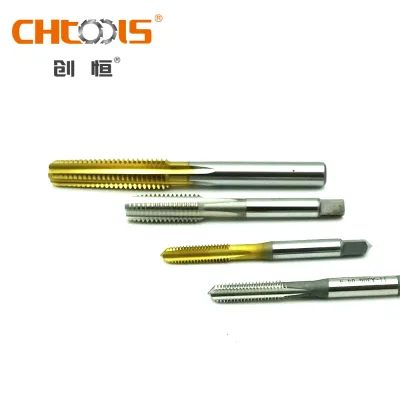
The core of the sourcing decision lies in the precise technical definition of the tap. The supplied data indicates a diverse range of attributes, including "Straight Flute," "Spiral Fluting Tap," and "Spiral Point Taps." While the core keyword emphasizes straight flute designs, the presence of spiral point and helical variants in the dataset suggests that buyers must clearly distinguish between chip evacuation methods. Straight flute taps are generally preferred for through-holes where chips can be pushed out of the hole, whereas spiral point (helical) taps are often better suited for blind holes to push chips ahead of the tool.
Material composition is a critical differentiator. The observed inventory includes taps made from "High-speed Steel," "Alloy Tool Steel," and specific grades like "6534 Material." High-speed steel remains the industry standard for general-purpose threading due to its balance of hardness and toughness. However, for applications involving harder materials, the distinction between standard HSS and alloy tool steel becomes vital. The data also notes "Applicable Hardness: Less Than HRC35," which serves as a crucial boundary condition for tool selection. Using these tools on materials exceeding this hardness threshold without verification can lead to rapid tool failure.
Size specifications vary significantly across the market. The dataset lists ranges from "M3 to M52" and "M2-M68," alongside specific inch-based models like "3/8-16." Buyers must verify that the supplier's inventory covers the exact metric or imperial dimensions required for their specific project. The "Pieces" attribute ranges from single units to sets of 20, indicating that procurement strategies should account for both single-tool replacements and bulk replenishment for high-volume production lines.
Compliance, Standards, and Certification Verification
In the B2B context, compliance is not merely a formality but a guarantee of interoperability and safety. The product data references a wide array of international standards, including "Metric," "American," "British," and specific codes such as "ansi," "bs," "iso," "din," and "gost." When sourcing straight flute HSS helical taps, buyers must ensure that the product documentation explicitly states which standard the tap conforms to. A tap labeled "Metric" must align with ISO 724 or DIN 13 standards, while American taps must adhere to ANSI/ASME B1.1.
The dataset also mentions "prod_standard: 3mm to 20mm," which appears to be a dimensional specification rather than a formal standard code. Buyers should be cautious not to confuse dimensional ranges with certification standards. The presence of "OEM" branding suggests that many suppliers operate as original equipment manufacturers, producing tools to customer specifications. In such cases, the burden of verifying that the OEM's internal quality control aligns with the buyer's required international standards falls entirely on the procurement team.
Furthermore, the "Surface" treatment options, including "Bright," "Ti-Coated," and "Tin Coating," impact the tool's performance and longevity. While these coatings are not certifications in themselves, they are process specifications that must be verified against the supplier's quality assurance protocols. Buyers should request test reports or material certificates that confirm the coating thickness and adhesion properties, especially for applications involving stainless steel or cast iron.
Cost Drivers and Pricing Dynamics
The observed price range for these tools spans from $0.20 to $50.00 USD, a variance that reflects differences in size, material grade, coating technology, and order volume. The minimum order quantity (MOQ) ranges from 1 to 200 pieces, indicating a market that accommodates both prototyping and mass production. Several factors drive the cost of straight flute HSS helical taps. First, the raw material cost is significant; taps made from "6534 Material" or high-grade alloy tool steel will command a premium over standard HSS. Second, the complexity of the geometry, such as the distinction between straight flute and spiral point designs, influences manufacturing time and cost.
Coating technology is another major cost driver. "Ti-Coated" (Titanium) taps generally cost more than "Bright" or "Tin Coated" variants due to the added value of increased wear resistance and reduced friction. The "prod_packing" attribute, ranging from "Plastic Box" to "industrial" packaging, also affects the final price. Industrial packaging often implies bulk handling and protective measures suitable for long-term storage, which may add to the unit cost but reduce damage rates during transit.
Buyers should analyze the total cost of ownership rather than just the unit price. A cheaper tap that fails prematurely due to inappropriate material hardness or poor coating adhesion can result in higher costs through downtime, scrap parts, and machine damage. The "Pieces" attribute, ranging from 1 to 20, suggests that bulk purchasing can significantly lower the per-unit cost, making it essential to forecast demand accurately before placing large orders.
Typical Applications and Machining Environments
The versatility of straight flute HSS helical taps is evident in the diverse applications listed in the data. These tools are designed for use in "Milling," "Drilling," and "Lathe" operations. The "Application for Machine Tool" field specifies "Milling" and "Drilling," while the "Application" field notes "Motorize" and "Manual" capabilities. This indicates that the tools are suitable for both automated CNC environments and manual bench operations.
The "Usage" attribute specifies "Through Holes or Shallow Holes," which is a critical limitation for straight flute designs. In through-hole applications, chips are expelled through the hole, making straight flutes effective. However, for deep blind holes, straight flutes may struggle with chip evacuation, potentially leading to tool breakage. In such scenarios, spiral point or helical flutes might be more appropriate, despite the core keyword focusing on straight flute designs.
The "Applicable Materials" field lists "Steel," "Stainless Steel," and "Cast Iron." The "Applicable Hardness" constraint of "Less Than HRC35" further narrows the scope. Buyers must ensure that the workpiece material falls within these parameters. For example, while the tool can cut stainless steel, the hardness of the specific alloy must be verified to ensure it does not exceed the HRC35 limit. Exceeding this limit can cause rapid dulling or catastrophic failure of the cutting edges.
Supplier Evaluation and Origin Analysis
Geographic origin plays a significant role in supplier evaluation. The data lists origins such as "Dongguang," "Jiangsu," "Danyang, Jiangsu," and "china." These regions are known hubs for manufacturing cutting tools in China. While the specific names of suppliers are not provided, the concentration of production in Jiangsu and Danyang suggests a mature supply chain with established logistics networks. Buyers should verify the specific factory location to assess logistics costs and lead times.
The "Customization" attribute is marked as both "Available" and "Non-Customized," indicating that some suppliers offer tailored solutions while others sell standard off-the-shelf products. For specialized applications, buyers may need to engage with suppliers capable of customizing flute geometry, coating, or thread specifications. The "Brand" attribute is listed as "OEM," suggesting that many suppliers operate under private label arrangements. Buyers should clarify whether the tool will be branded with their own logo or the supplier's, as this can impact brand perception and warranty claims.
When evaluating suppliers, buyers should look for evidence of consistent adherence to the listed standards (ISO, DIN, ANSI) and the ability to provide traceability for materials like "6534 Material." The presence of "Straight Flute" and "Spiral Fluting" in the same dataset highlights the need for clear communication regarding the exact geometry required. Misunderstandings between straight and spiral flute designs can lead to procurement errors that are costly to rectify.
Quality Control and Long-Term Procurement Considerations
Quality control in the procurement of cutting tools involves rigorous inspection of both the tool itself and the supplier's processes. The "Thread Quality" is specified as "Cut Thread," which is the standard for tapping operations. However, buyers should verify the tolerance class (e.g., 6H, 6G) to ensure compatibility with their threaded holes. The "prod_model" varies from "standard" to specific dimensions like "M6*1.0mm," emphasizing the need for precise model verification.
Long-term procurement considerations include the stability of the supply chain and the consistency of product quality. The "Surface" treatments, such as "Bright" and "Ti-Coated," must be consistent across batches to ensure predictable tool life. Buyers should establish a quality agreement with suppliers that defines acceptable variance in coating thickness, hardness, and dimensional accuracy.
The "Pieces" attribute, ranging from 1 to 20, suggests that inventory management is a key factor. For high-volume applications, maintaining a buffer stock of standard sizes (e.g., M3 to M52) is essential to prevent production stoppages. For low-volume or custom projects, the ability to source single units with short lead times is equally important. Buyers should also consider the "prod_packing" options; "industrial" packing is preferable for bulk storage, while "Plastic Box" may be suitable for individual tool storage and protection.
In conclusion, sourcing straight flute HSS helical taps requires a balanced approach that considers technical specifications, compliance standards, cost drivers, and supplier reliability. By rigorously verifying material grades, coating types, and application limits, buyers can ensure that their procurement strategy supports efficient and high-quality machining operations. The diversity of the available data underscores the importance of clear communication and precise specification when engaging with suppliers in this competitive market.
FAQs
What material grades are used for straight flute HSS helical taps?
These taps are primarily made from High-speed Steel, Alloy Tool Steel, or 6534 Material. Buyers must verify the specific grade matches the workpiece hardness, as the applicable limit is less than HRC35 for optimal performance.
Which standards do these taps conform to for international use?
The products conform to Metric, American, and British standards, including specific codes like ANSI, BS, ISO, DIN, and GOST. Buyers should request documentation confirming the specific standard code to ensure interoperability with their machinery.
Can these taps be customized for specific thread requirements?
Customization is available for certain suppliers, while others offer non-customized standard models. Buyers seeking specific dimensions like M3 to M52 or inch sizes like 3/8-16 should confirm availability with the manufacturer before ordering.
How do coating options affect the performance of these taps?
Coating options include Bright, Ti-Coated, and Tin Coating finishes to enhance wear resistance. Titanium coatings generally offer superior durability for stainless steel, while tin coatings provide basic protection for general steel applications.
What is the minimum order quantity for purchasing these tools?
The minimum order quantity ranges from 1 to 200 pieces depending on the supplier and product model. Single units are available for prototyping, while bulk orders of 20 pieces or more are common for industrial replenishment.
Which machining operations are suitable for straight flute HSS helical taps?
These tools are designed for Milling, Drilling, and Lathe operations in both motorized and manual settings. They are specifically intended for through holes or shallow holes where chip evacuation is not obstructed by deep blind hole geometries.